
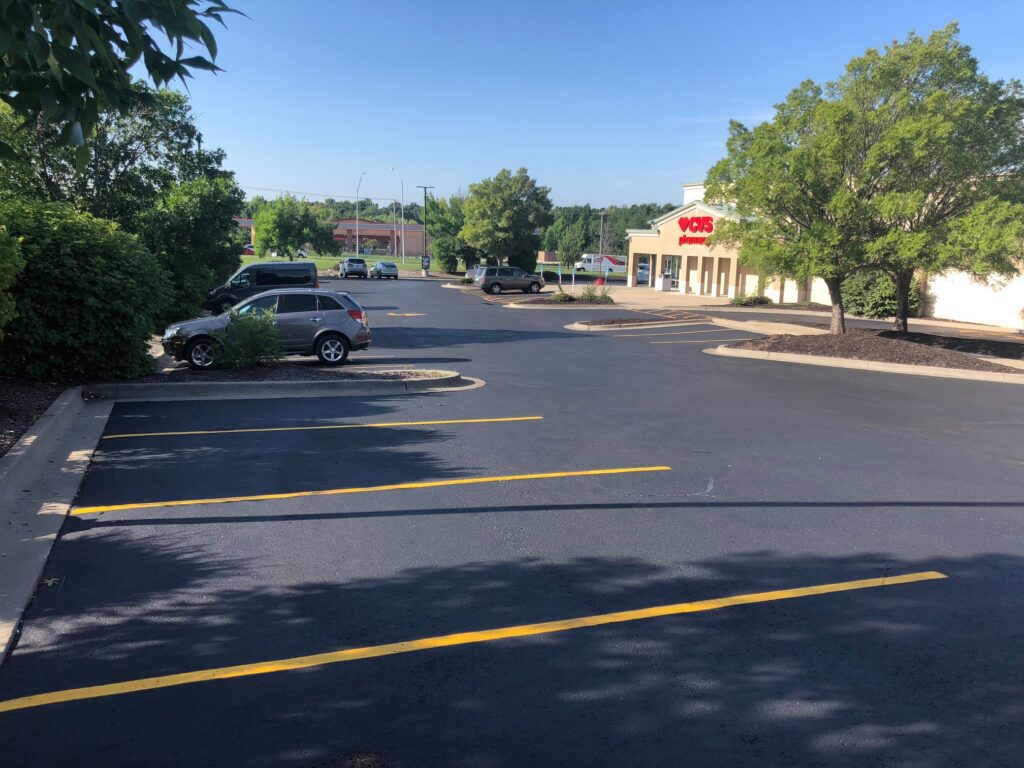
A commercial lot in the Kansas City metro takes a beating from delivery traffic, turning movements, and a freeze-thaw season that can open cracks fast.
If you manage retail, multifamily, medical, or industrial sites, the hard part is not noticing problems. It’s knowing what to fix first, what can wait, and how to schedule work without upsetting tenants and customers.
This guide gives you a risk-based plan you can use to prioritize repairs, plan seasonal work, and keep your pavement performing year after year.
Key Takeaways
- A strong parking lot program starts with mapping real traffic patterns, not just listing surface defects.
- In the Kansas City metro, drainage and ponding should be addressed early because freeze-thaw magnifies water-related damage.
- Crack sealing and targeted repairs protect the base and usually cost less than waiting for potholes and structural failures.
- Phasing, approvals, and clear triggers make it easier to budget and schedule work without disrupting tenants.
Risk-Based Plan for Year-Round Lot Performance
In the Kansas City area, potholes and broken edges rarely start as “big” problems, especially near busy corridors like I-435 and I-70 where traffic loads add up.
Start with a baseline that matches how your site functions day to day, then move through water control, crack repair, surface protection, and markings in the order that prevents expensive failures.
A Condition Map That Mirrors Traffic and Operations
Begin by walking the lot the way vehicles actually use it, including the delivery path, dumpster approach, and the tight turns that grind pavement at convenience stores and quick-serve restaurants.
In high-turn zones common around Northland retail and strip centers, document cracking, raveling, and any spots where tires scrub the surface and push aggregate loose.
Our approach is to tie each issue to a likely cause so the fix targets the problem, not just the symptom.
Water Management That Stops Damage at the Source
Ponding water is a multiplier in this region because it seeps into small openings, then expands during cold snaps and spring thaws.
Pay close attention to low spots near entrances, curb returns, and catch basins, since runoff patterns can change as nearby landscaping settles.
If water sits after a normal rain, treat drainage as a first-priority item because it accelerates cracking and can undermine the base under drive lanes and parking stalls.
Crack Sealing and Targeted Repairs Before the Base Fails
Once cracks connect, water migrates downward, and the pavement structure starts to break apart, which is why the shoulder seasons matter so much in the Midwest.
Focus first on cracks near loading docks, trash enclosures, and high-stop areas where heavy vehicles pause and twist, like behind restaurants along major arterials.
When repairs are needed, our process includes cleaning and preparing the crack and using quality asphalt binders so the repair bonds and performs instead of popping out early.
Surface Protection Timed to Your Operating Calendar
Sealcoating is a surface treatment that helps slow deterioration, and it works best when the pavement is structurally sound and properly prepared.
Many commercial properties plan for reapplication on a repeating cycle, often every 2–3 years as an estimate, with timing influenced by traffic, sun exposure, and the amount of winter deicer tracked across the lot.
We don’t rush this step. We repair cracks and potholes first, then clean thoroughly so the coating adheres evenly and cures into a durable, uniform surface.
Markings and Concrete Touchpoints That Reduce Risk
Striping is more than aesthetics in a busy metro lot, especially where pedestrians cut across drive aisles at medical offices, schools, and multifamily communities in areas like Raytown and Independence.
Fresh lines, directional arrows, and clear accessible stalls help reduce confusion and improve traffic flow, and it’s also the moment to evaluate crosswalk placement and signage.
We handle new layouts, striping, and restriping, and we can help you think through ADA-related markings so the finished plan supports safer movement and clearer parking behavior.
Coordinate Scope, Access, and Approvals Without Surprises
Kansas City sites often have competing demands: tenants need access, deliveries cannot stop, and weather windows can shift quickly in late fall and early spring.
The key is turning your plan into a phased scope that protects uptime, sets expectations, and locks in approvals before crews arrive.
Phasing That Keeps Tenants Moving and Revenue Flowing
A practical scope separates the lot into work zones based on entrances, shared drive aisles, and the paths people use to reach storefronts and leasing offices.
For shopping centers near Ward Parkway or along US-71, that usually means keeping at least one primary ingress open while rotating closures across parking fields.
Build the schedule around peak traffic patterns, then pair each phase with clear temporary signage so drivers don’t improvise routes through pedestrian areas.
Approvals and Site Details That Prevent Day-of Delays
Before work begins, confirm who can approve changes on the spot, especially for striping layouts, fire-lane markings, and accessible stall placement.
Properties with multiple stakeholders, like HOAs, multifamily ownership groups, or third-party facility managers, move faster when the decision chain is defined up front.
Also, gather practical site constraints like gate codes, after-hours access, dumpster relocation rules, and any delivery time restrictions that affect staging.
A Budget Timeline Built Around Triggers, Not Guesswork
Instead of budgeting as one annual line item, tie spending to condition triggers like “cracks connecting,” “ponding after normal rain,” or “striping no longer visible at night.”
In this region, timing and cost are influenced by the size of the lot, the depth and spread of damage, traffic levels, and how much phasing is needed to keep the site open, so ranges should be treated as estimates.
When you plan early, you can approve the high-impact items first and schedule the rest into workable windows without paying the premium that comes with emergency repairs.
Get A Commercial Maintenance Plan From All Pro Asphalt & Maintenance
All Pro Asphalt & Maintenance focuses on commercial paving and pavement maintenance across the Kansas City area, including asphalt paving, asphalt crack repair, asphalt sealcoating, parking lot repair, parking lot striping, and concrete services.
If you want a plan that prioritizes the right fixes in the right order, we can walk your site, identify what’s driving the wear, and recommend a scope that fits your operations.
Reach out to request an estimate, and we’ll help you set a maintenance path that protects access, safety, and pavement life.
Frequently Asked Questions
How often should a commercial lot be sealcoated?
Many properties plan on a repeating cycle, often every 2–3 years as an estimate, but the right timing depends on traffic volume, sun exposure, and how quickly the surface is oxidizing or raveling.
What causes potholes in asphalt parking lots around Kansas City?
Potholes often start when water gets into cracks, weakens the base, and then expands during freezing weather, breaking the pavement from the inside out. Heavy turning and stopping loads near dumpster pads, loading areas, and entrances make that deterioration happen faster.
Can striping be done without sealcoating?
Yes, restriping can be done as a standalone update, especially when the surface is in decent shape, but the markings have faded. The key is making sure the surface is clean and sound so that paint adheres well and stays crisp. If you are already planning sealcoating, striping is typically scheduled after the coating cures, so the layout looks sharp and lasts longer.
How do you minimize disruption during repairs and maintenance?
The best approach is phasing the work so at least one main entrance and key drive aisles remain open, then rotating closures across sections of the lot. Clear temporary signage and a defined traffic plan reduce confusion for tenants, customers, and delivery drivers. Scheduling around peak hours and coordinating access details ahead of time prevents avoidable day-of delays.